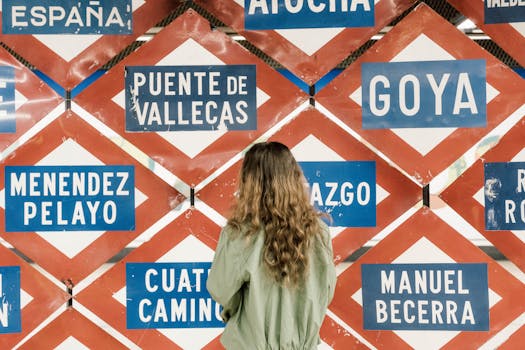

Imagine a bustling city, a symphony of hurried footsteps, the distant hum of traffic, and the almost invisible network that keeps it all alive. We often talk about the “pulse” of a city, but have you ever stopped to consider the intricate, often unseen, veins that facilitate its very existence? The term “Metro Vein” sparks an immediate image, doesn’t it? It conjures thoughts of arteries, of lifeblood, of critical pathways. But what lies beneath this evocative phrase? Is it merely a metaphor for public transit, or does it encompass something far more profound about how our urban landscapes function and how we, as inhabitants, connect within them?
This isn’t just about mapping out subway lines or bus routes. It’s about probing deeper, questioning the assumptions we make about urban flow, and understanding the complex interplay of systems that make our metropolises not just habitable, but vibrant. Let’s embark on an exploration, dissecting what “Metro Vein” signifies and how it shapes our daily lives, often in ways we don’t consciously acknowledge.
The Arteries of Accessibility: More Than Just Commutes
When we first encounter the concept of a “Metro Vein,” the most immediate association is with transportation infrastructure. Think of the sprawling subway systems in cities like London, Tokyo, or New York. These are the literal veins, carrying millions of people from one point to another, powering commerce, and enabling social interaction. However, a deeper dive reveals this is just the surface layer.
Consider the efficiency of these systems. Are they truly serving as smooth, life-giving conduits, or do they sometimes become bottlenecks, constricting rather than facilitating? The quality of these transport veins can dramatically influence economic opportunity, access to healthcare, and even mental well-being. A city with a robust, well-maintained “Metro Vein” of public transit is a city that offers greater equity and possibility. Conversely, poorly managed or underdeveloped transport can create literal divides, isolating communities and hindering progress. It’s a fascinating paradox, isn’t it?
Beyond the Tracks: The Digital and Information Lifelines
In our hyper-connected world, the concept of a “Metro Vein” must surely extend beyond physical movement. What about the flow of information? The digital infrastructure – the fiber optic cables, the Wi-Fi signals, the cellular networks – forms another critical, albeit invisible, circulatory system for modern cities. This “digital vein” dictates how we communicate, access services, and even participate in civic life.
Think about the implications for remote work, telemedicine, or the dissemination of emergency information. When this digital vein is strong and accessible, it empowers individuals and communities. When it’s weak or unevenly distributed, it exacerbates existing inequalities, creating a digital divide that mirrors, and often amplifies, physical ones. This raises a crucial question: are we investing enough in the health and robustness of our digital arteries?
The Veins of Commerce and Supply Chains
Every product we purchase, from our morning coffee to the latest tech gadget, has traveled through a complex network of supply chains. These are the commercial veins of our cities, the pathways through which goods and services flow. Logistics, warehousing, and delivery networks are the unsung heroes that keep our urban economies humming.
The resilience of these commercial veins is paramount. A disruption, whether due to extreme weather, labor disputes, or global events, can send ripples of scarcity and economic strain throughout the entire urban organism. Understanding how to strengthen and diversify these supply chains is essential for ensuring urban stability and prosperity. It’s a constant dance between efficiency and vulnerability.
Social Fabric: The Veins of Community Connection
Perhaps the most intriguing, and often overlooked, aspect of the “Metro Vein” concept lies in the social realm. These are the informal pathways of connection: the neighborhood cafes where conversations spark, the parks where families gather, the community centers that foster belonging. These are the threads that weave the social fabric of a city, creating a sense of place and shared identity.
How do urban planning and infrastructure design impact these social veins? Does a well-designed public square encourage spontaneous interaction, or does a lack of accessible green spaces lead to isolation? Nurturing these social arteries is just as vital for a healthy city as maintaining its transport or information networks. It’s about cultivating spaces where genuine human connection can flourish, creating a more resilient and vibrant community.
The Health of the Veins: Towards a Holistic Urban Well-being
So, when we speak of “Metro Vein,” what are we truly aiming for? It’s not simply about the existence of these networks, but their health. A healthy “Metro Vein” system is one that is equitable, efficient, resilient, and promotes the well-being of its inhabitants. It means:
Accessible and reliable public transportation for everyone, regardless of socio-economic status.
Ubiquitous and affordable digital connectivity that bridges the digital divide.
Robust and adaptable supply chains that ensure essential goods are available.
Vibrant social spaces that foster community and a sense of belonging.
Final Thoughts: Cultivating the City’s Lifelines
The term “Metro Vein” is more than just a catchy phrase; it’s an invitation to think critically about the interconnected systems that define urban life. It challenges us to look beyond the obvious, to question the current state of our city’s lifelines, and to envision a future where these veins are not just functional, but thriving. As we continue to build and adapt our urban environments, understanding and actively nurturing these diverse “Metro Veins” will be key to creating cities that are not only livable, but truly flourishing for all. It’s a continuous journey of observation, adaptation, and thoughtful development.